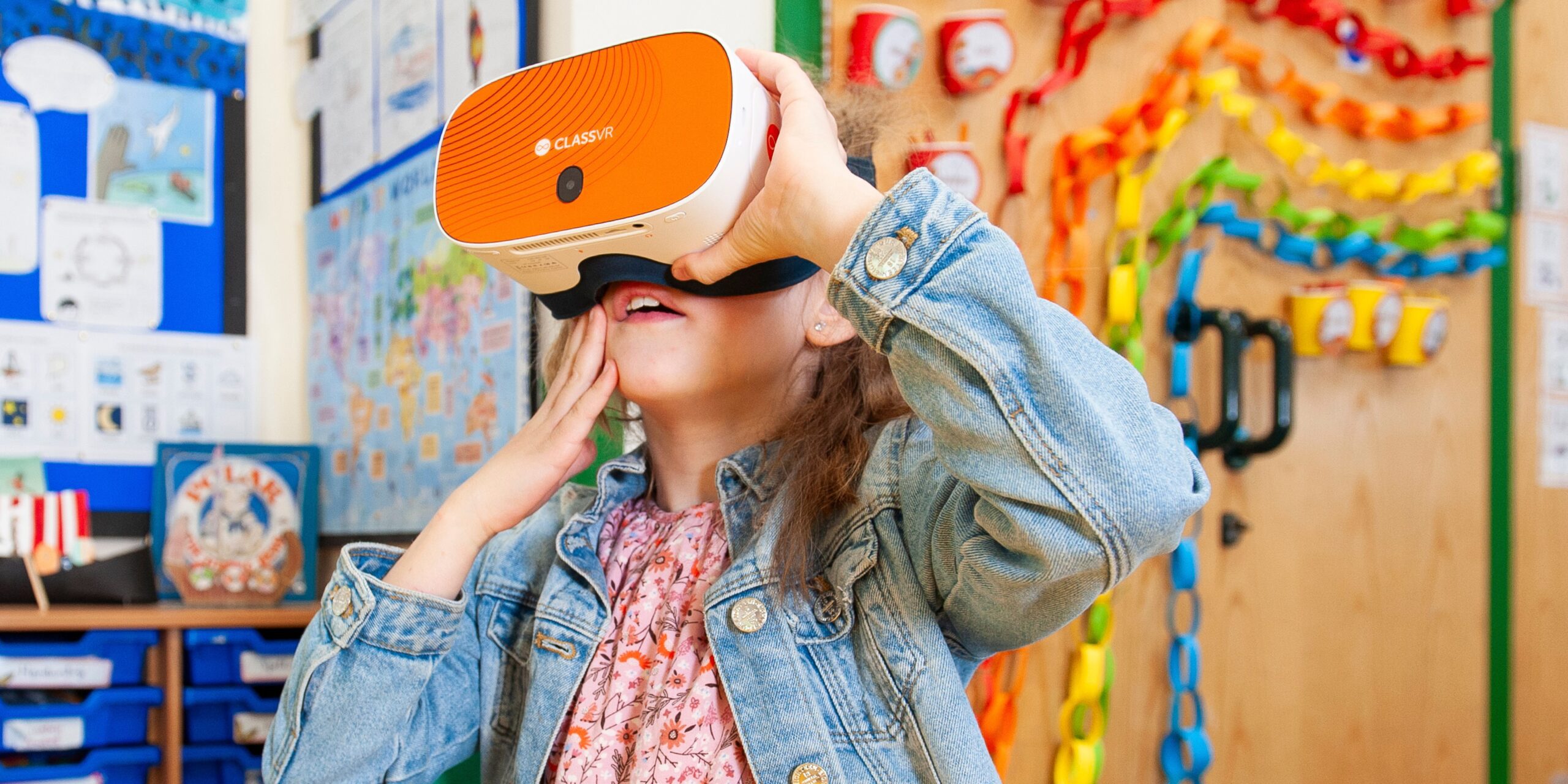




Most discussions surrounding advancing virtual reality technology and children’s mental health would once tell you the same thing: technology is damaging and should be avoided until a young brain is fully developed. But with the emergence of technologies such as AI, mixed reality and immersive technology, this narrative has quickly shifted as we have been forced to acknowledge the harsh reality that: in today’s world, technology can no longer simply be bypassed. Its use is as inevitable for children as the sun setting. And so, it is more important than ever that we flip the script and explore the benefits of virtual reality on children’s mental health.
But I know what you’re probably thinking…how exactly could virtual reality benefit children’s mental health?
Well, since 1995, ‘virtual reality therapy’ has been widely explored in child mental health services as a way to treat phobias, trauma, and cognitive conditions such as ADHD and Autism. But as this technology has continued to advance and be acknowledged for its pioneering approach, more child-centred settings are beginning to introduce virtual reality products to help children and their mental health. Schools, dentist offices, soft play centres and paediatric departments within hospitals have all begun incorporating virtual reality as part of their approach, but why?
Well, let’s take a closer look!
What is Virtual Reality Therapy?

Virtual reality therapy is a legitimate therapeutic method that has been used by child psychologists all across the world for the past three decades. Though, in recent years, it has seen significant traction due to its flexibility allowing this technology to easily adapt to meet the individual and complex needs of every child.
But what exactly is this?
Well, virtual reality therapy is usually conducted with a VR headset that transports the user into an immersive metaverse powered by computer-generated visuals that feel entirely realistic. This environment is fully controllable for the user and allows them to experience scenarios and gamified content that either relaxes them and combats anxiety, or exposes them to phobias or situations that make them uncomfortable – allowing them to learn control and emotional regulation in a manufactured reality that is safe and controlled.
What can virtual reality therapy be used for?

Virtual reality therapy can be used for a number of different reasons in a range of child-centred settings. So let’s explore!
Anxiety & Stress Reduction
It’s not uncommon for children to feel stressed and anxious, particularly when experiencing certain situations such as going for surgery, having a dental procedure done, or experiencing something that just naturally makes them apprehensive – like spending the night away from home or travelling in a way that makes them sick. All of these things can be treated with VR technology.
Dental offices and hospitals are now recognizing the power of immersive and virtual technology and are implementing its use to coincide with procedures for children. This therefore provides patients with a distraction and makes the procedure far less stressful both for the child and the parents.
This has been particularly useful for children with additional needs as clinical environments can be overstimulating and can cause extreme distress with the bright lights and constant noises. Virtual reality takes this stress away and can replace the clinical environment with a soothing setting that evokes calm.
Exposure Therapy
Children have phobias. And phobias are always better to be overcome in childhood rather than adulthood when these fears are more deep-rooted and harder to eradicate.
Exposure therapy helps children to face their phobias head on. Whether they’re afraid of spiders, heights, or even dogs, children can confront their antagoniser in a manufactured environment that is safe and controlled, giving children a sense of security and determination knowing nothing can physically hurt them.
Social & Emotional Skill Exploration
Virtual reality has been significant in helping children with Autism and other learning difficulties to overcome social and emotional barriers. Through simulations that feel entirely realistic, children can play out everyday scenarios and practice how best to respond with a clear aim in mind. An aim which might be to make a friend or to respond to a challenging situation.
This is particularly useful in a school setting where children with and without social anxieties can practice cues, eye contact and communication skills without any of the real-world pressure.
Emotional Regulation
Children with trauma related anxieties can utilise virtual reality as a coping mechanism that teaches them emotional control. This is also useful for children with neurodevelopment conditions such as ADHD as virtual reality and gamified content can help them to regulate their emotions while also focusing on tasks and thinking their actions through.
Cognitive Function
Recent research has suggested that virtual reality and immersive technologies are showing signs of improved cognitive function with children and young people. This means that by exploring virtual and immersive computer-generated environments, children are developing their attention to detail and problem solving capabilities at a faster rate than with traditional learning models.
This is further enhanced through educational games that encourage children to interact with their peers to achieve a shared goal, meaning cognitive development isn’t noticed by children as they’re simply exploring a no-pressure environment.
Conclusion

Children exploring technology was once a taboo subject, especially within an educational setting. But with continuous advancements and the pioneering opportunities offered by VR technology, we’re forced to acknowledge the various benefits of virtual reality on children’s mental health. These benefits include providing a distraction, practicing communication skills, and regulating fear, anxiety and emotional turmoil, allowing children to focus on making friends and living their childhood as worry-free as possible.
We’d love to know your thoughts about the benefits of virtual reality on children’s mental health! Get in touch to let us know.