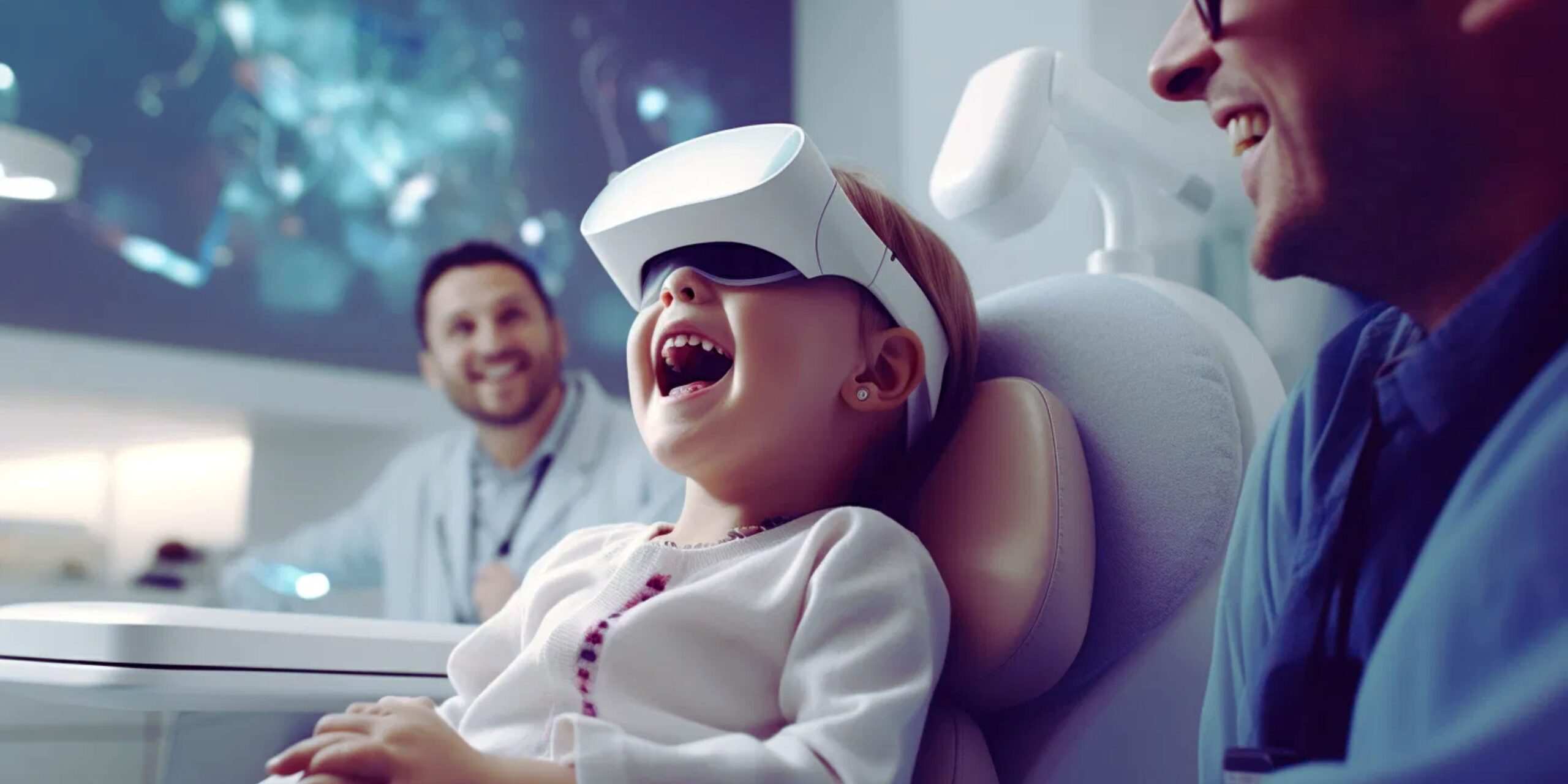




Why would dentists invest in virtual reality therapy you ask? Well, fear and apprehension regarding dental treatment are one of the most significant factors to poor oral health in the UK, which along with tooth decay, has contributed to a 14% rise in NHS tooth extractions in children under 19 this past financial year alone. As a result, we’re exploring how virtual reality therapy might help combat this negative association with paediatric dentistry.
So, let’s get into it…
The Evidence
This comes after a recent study conducted by the National Library of Medicine, explored the impact of virtual reality therapy on paediatric dentistry with 2,558 children aged between 5 and 12 years old taking part in the research project. This research was carried out and analysed with a range of treatment options, from initial consultations right through to invasive procedures that required local anaesthetic. During these procedures, children taking part in the study were each given a different VR headset and were transported away from the clinical environment and into a realm of distraction. This was done as a way of analysing anxiety and apprehension, behavioural patterns, and cooperation.
From this initial study, it was discovered that behavioural issues, anxiety, and pain scales were reduced significantly with the intervention of virtual reality therapy, especially in comparison to traditional distraction techniques such as audio, tablets and TV screens. This can be attributed to VR’s unparalleled ability to divert patient attention away from the procedure as they’re transported out of the clinical setting and immersed in a virtual world that enhances sensory detailing, making the clinical smells and sounds bleed away with something much more pleasant.
What are the main benefits of virtual reality therapy in a paediatric dentistry setting?
Pain and Anxiety Management
VR Headsets in any clinical setting help soothe anxiety with calming content and distract from the clinical environment with immersive visual scenes and sounds. Particularly useful for children with dental phobias and additional needs, this intervention transitions the dentist’s office into a safe oasis for the child, making a visit to the dentist less stressful and less likely to evoke negative feelings in the future.
Improved Procedure Outcomes
As VR Therapy helps calm nerves and dull pain, procedures have been shown to reduce in duration and improve patient cooperation. As a result, patients, their parents/guardians and dental professionals are more content with results, preventing further intervention being needed.
Positive Experiences
Children and adults alike avoid dentists because they fear dental procedures and the wider environment. With the intervention of virtual reality therapy however, the hope is that children in particular will view a trip to the dentist as a positive experience rather than a negative one.
Accessibility and Safety
For children with phobias and additional needs, their fear of dentists can be so profound that they lash out and resort to violence. This is extremely difficult for parents and carers to witness and can be frustrating for dental staff who want the best outcome for their patient. Virtual reality therapy however allows dentists to calm and distract patients in a safe and fully controlled environment until they’re ready for procedures to begin.

What are the downsides to Virtual Reality Therapy?
Like anything, virtual reality therapy has its pitfalls. This technology is relatively new to paediatric dentistry and will have some flaws. But what exactly are they? Well, let’s take a look!
Communication
Distraction therapy is great for pain perception and reducing anxiety in children, particularly those with extreme phobias, but this does also have one key obstacle: communication…or lack thereof.
During more invasive procedures where local anaesthetic is needed, such as restorative treatments or extractions, VR headsets could be seen as a barrier between the dentist and the patient as it can impact clear communication. While we want the child to be distracted, we don’t want injections or waves of pain to come as an absolute shock to the child’s body. And so, it is important this is assessed and planned in a way to mitigate this issue within the paediatric dentistry setting. Some VR Headsets are now available with a flap for clear communication, so this could be the best option for dentists who worry about the impact headsets may have on communication with patients.
Lack of Parent/Caregiver View
As children slip on their VR headsets, they may feel apprehensive about not being able to see their parents or caregiver. If this is the case, parents can be advised to sit beside or close to their child so their presence can be felt, allowing the child to slip into the virtual world and embrace their calming environment.
Cybersickness
Similar to motion sickness, cybersickness happens while sitting motionless as the body receives conflicting sensory signals during immersion in a digital world. While the eyes might perceive motion in the virtual setting, the inner ear senses no physical movement, resulting in symptoms such as dizziness, nausea, headaches, eye strain and disorientation.
To prevent cybersickness in patients, there are a couple of different things you can do, including keeping them seated at all times and directing a fan on them while immersed to keep them cool. This will keep patients safe and will prevent those hot sweats that may bring on nausea and vertigo. Further to this, make sure headsets and lenses are snug and fitted correctly.
If Cybersickness does occur, stop immediately and wait until the patient is feeling well enough to continue with their examination or procedure.

Conclusion
Virtual reality therapy within paediatric dentistry has its downfalls but in our humble opinion, the benefits of this technology far outweigh the cons. As the NHS is currently facing a crisis in child oral health, virtual reality therapy could be the intervention that is needed to challenge a child’s perception of the clinical environment, leading to more frequent dentist visits and better oral health in the long term.
We would love to know your thoughts about virtual reality therapy in a paediatric dentistry setting, let us know if you’re for or against the introduction of this technology!